Email Privacy for High Net Worth Individuals: A 2026 Guide
· 11 min read · Luca Algeri
Leggi in italianoA practical guide to protecting sensitive financial correspondence in 2026: zero-knowledge encryption, metadata, cryptographic transparency, jurisdiction, family office governance and safe recovery.
Key takeaways
- Choose encryption whose keys remain under your control, rather than relying on a provider's reputation alone.
- Separate encrypted content from metadata: encryption does not automatically hide who communicates with whom.
- Check source code and independent audit reports; published code is not proof that a service has been audited.
- Combine device protection, multi-factor authentication and an offline Recovery Kit.
- Plan family office continuity without assuming an administrator can recover a user's Master Password.
How does zero-knowledge architecture protect financial correspondence?
Protecting email privacy for high net worth individuals starts with checking the technical architecture, not simply choosing a well-known brand. Tax records, contracts, investment instructions and personal correspondence reveal both assets and relationships. Ask who can decrypt the content, where the keys are generated and what remains visible during delivery.
With client-side end-to-end encryption, content is encrypted on the sender's device and decrypted by the authorized recipient. A zero-knowledge design prevents the provider from reading the content protected by this scheme because it does not have the required decryption keys. TLS, by contrast, protects the connection but does not by itself prevent a mail service from reading messages on its servers.
The distinction matters when evaluating MailCripty: encrypted internal messages and protected external sharing are different from ordinary incoming internet mail. An external message sent without end-to-end encryption is processed by the receiving infrastructure before being encrypted for storage in the recipient's vault. Encrypting it after receipt does not retroactively make its journey end-to-end encrypted. Explicit unencrypted sending is also a separate option requiring confirmation.
This guide examines the practical criteria for selecting a service and organizing a family office's communications. Encryption reduces exposure, but no service provides absolute privacy: compromised devices, recipients, metadata and legal obligations remain part of the threat model. Match the channel to the sensitivity of each document instead of treating every email as equally protected.
Which metadata remains visible even when the message is encrypted?
Encryption of the message body does not necessarily hide sender and recipient addresses, delivery times, message sizes, IP addresses or subject lines. What is visible depends on the protocol and implementation. Standard email needs routing information, so a claim of encrypted content must not be confused with a claim of anonymous communication.
For a family office, a pattern of messages to a private bank, tax adviser or asset broker can reveal relationships without revealing the content. Attackers may use these clues to craft convincing spear-phishing messages, impersonate a trusted adviser or time fraudulent payment instructions to coincide with expected transactions.
Ask the provider which headers are encrypted, what delivery and access logs are retained, for how long, and which third parties process them. Avoid putting account numbers, transaction amounts or sensitive legal details in subject lines. Use role-specific aliases to reduce unnecessary exposure of the primary address, but remember that aliases are not an anonymity system.
Tracking pixels and remote images can also disclose when a message is opened. MailCripty blocks remote images initially and lets you authorize them for a specific sender. Review those permissions regularly; a familiar-looking display name alone is not proof of the sender's identity.
Does paying for email guarantee that your data stays private?
No. A subscription can align a provider's incentives with its users, but price alone does not prove zero-knowledge encryption or the absence of tracking. Free services have different business models, and it is inaccurate to assume that all of them sell inbox contents or scan financial documents for advertising. Evaluate the actual privacy policy and technical controls.
Traditional services may process messages to support search, spam detection and other features when their infrastructure can access the content. A zero-knowledge service limits access to the content covered by its encryption design. Compare these boundaries directly, including external mail handling, diagnostics, abuse prevention and metadata retention.
| Criterion | Provider-managed encryption | Client-side zero-knowledge encryption |
|---|---|---|
| Key control | Provider manages keys used on its servers | User controls keys for protected content |
| Content access | Provider may be able to decrypt stored messages | Provider cannot read content protected by this scheme |
| Metadata | Depends on protocol and retention policy | Still requires a separate assessment |
| Legal requests | Readable content may be available | Ciphertext and available metadata may still be disclosed |
| Compromised device | Can expose readable messages | Can also expose messages after decryption |
MailCripty offers a 30-day free trial with 500 MB and a payment card required at the start. A reminder is sent on day 20; Pro starts after the trial unless cancelled. Review the current plans and terms before moving a long-term archive, and test the service with non-sensitive messages first.
What should you verify in the cryptographic module?
A public cryptographic module lets specialists inspect how keys are created, used and protected. MailCripty documents AES-256-GCM for content encryption, RSA-OAEP 2048 for wrapping encryption keys and PBKDF2 with 250,000 iterations for Master Password key derivation. The implementation and its parameters matter as much as the algorithm names.
Check random number generation, nonce handling, key storage, authenticated encryption and recovery flows. Ask whether an independent security assessment covers the current implementation, who performed it and whether its findings and remediation are public. Open-source availability is not equivalent to an independent audit, and an audit is not a guarantee that there are no vulnerabilities.
Prefer established cryptographic standards and maintained implementations over proprietary algorithms. Have a qualified specialist review the design against your threat model, including browser extensions, software updates, dependencies and endpoint compromise. A transparent vulnerability reporting process is another useful sign of operational maturity.
How do jurisdiction and GDPR affect email privacy?
Review the provider's legal establishment, hosting locations, subprocessors and international transfers. The GDPR provides a framework for protecting personal data, but it does not exempt anyone from lawful requests, nor does it certify that a service is secure simply because it operates in Europe.
A provider that lacks the keys cannot hand over readable content it cannot decrypt. However, it may still be required to disclose stored ciphertext, account information, payment records or available metadata. Legal obligations may also concern future logging. Zero-knowledge architecture reduces one avenue of access; it does not create immunity from investigation or lawful disclosure.
For a family office, assess data processing agreements, retention periods, deletion procedures and breach notification alongside encryption. Ask legal counsel to evaluate requirements in the relevant jurisdictions. Do not treat encrypted email as a way to avoid record-keeping duties or other legal responsibilities.
Which administrative controls does a family office need?
A family office needs ownership of its domain, controlled onboarding and offboarding, clear permissions and a plan for business continuity. Staff should not manage critical correspondence through unrelated personal accounts. Separate roles and addresses for finance, administration and suppliers, and document who is authorized to act on payment instructions.
MailCripty's organization tools support company domains and member management. Do not assume that every feature advertised by other enterprise providers is included: legal hold, centralized archive recovery, detailed audit logs and contractual service-level guarantees must be checked individually before purchase.
Some services offer organization recovery keys, but MailCripty must not be described as providing an administrator override for a user's Master Password. Its recovery mechanism is the user's personal Recovery Kit. Managing an address or disabling access is not the same as obtaining the keys to historical encrypted messages.
Plan authorized handover and exports before a staff member leaves, with clear consent, secure storage and legal advice where required. Define a retention policy for business records and limit access to the people who need it. Never rely on an assumed emergency backdoor to guarantee access to an encrypted archive.
How should you protect the Master Password and recovery material?
The login password and Master Password serve different purposes. Account authentication establishes who you are; the Master Password unlocks the vault's protected keys. Changing a login password does not automatically recover encrypted content. MailCripty does not know your Master Password and support cannot bypass it.
Create a strong, unique Master Password and generate your personal Recovery Kit. Keep the kit offline in a secure place, separate from the device used every day. Anyone who obtains recovery material may gain access to the vault, so treat it as a sensitive secret. Without the Master Password and without a usable Recovery Kit, protected data may be permanently inaccessible.
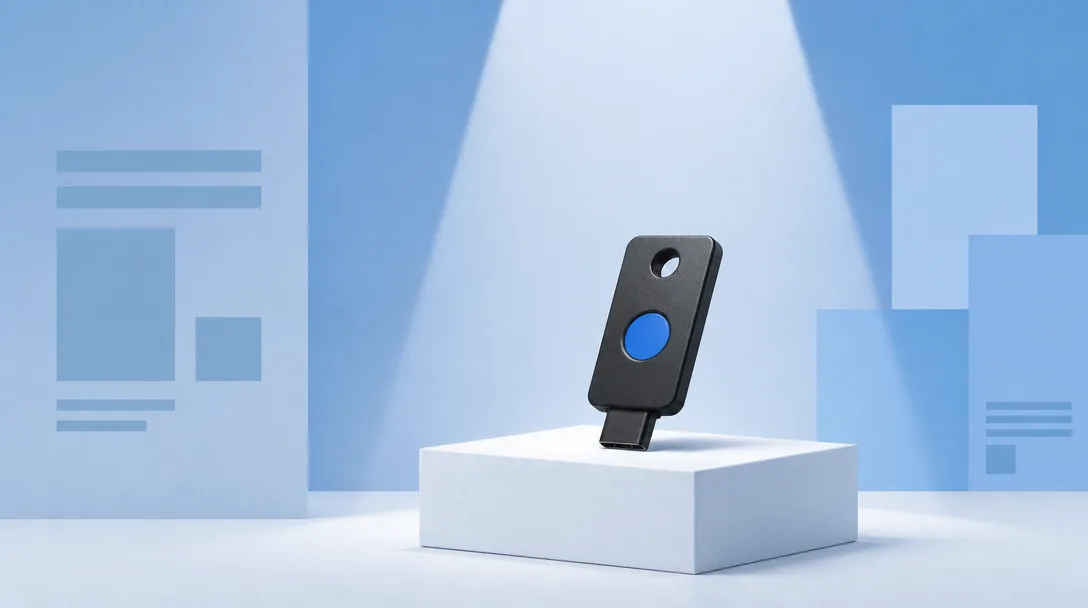
Use multi-factor authentication for account access. Where a service supports hardware security keys or passkeys, verify device and recovery compatibility and keep a backup authentication method securely. In MailCripty, passkey login does not replace the Master Password and does not bypass the required second-factor verification. A hardware key shown here illustrates account protection, not a universal vault-unlocking method.
Keep operating systems and clients updated, lock devices when unattended and review browser extensions. For payment instructions, confirm new or changed bank details through an independently verified phone number. Encryption alone cannot prevent fraud by a compromised sender or an authorized recipient.
How do you build a practical migration plan?
Begin with an inventory of accounts, important contacts, retention obligations and archive size. Classify the most sensitive exchanges and choose an appropriate encrypted channel for each. Test internal encrypted messages, protected external sharing, ordinary incoming mail and recovery as separate flows so that their differences are understood.
Move a small set of non-sensitive communications first, verify delivery and export, then migrate in stages. Agree on procedures with advisers and staff, including payment verification and what to do if a device or account is compromised. Reassess permissions and retention periodically instead of assuming the initial configuration will remain adequate.
Frequently asked questions
Can my email provider see encrypted attachments?
When attachments are end-to-end encrypted with keys unavailable to the provider, it cannot read their contents. File names, sizes and previews depend on the implementation and are not automatically hidden. Ordinary incoming external mail is not retroactively end-to-end encrypted by encrypting it for storage.
Is Gmail secure enough for a high net worth individual?
Gmail provides substantial account and transport protections, but ordinary personal Gmail is not zero-knowledge email by default. Suitability depends on the threat model and configuration. If your requirement is that the provider cannot read sensitive content, use a channel that explicitly provides that property.
What happens if I lose my Master Password?
In MailCripty, a previously generated personal Recovery Kit can help restore access to the vault. Without the Master Password or a usable kit, the provider and an organization administrator cannot recover protected content. A login password reset or passkey is not a substitute.
Does zero-knowledge encryption prevent government data requests?
No. The provider must comply with applicable law and may disclose ciphertext and information it actually holds, including metadata. The protection is that it cannot supply readable protected content when it does not possess the decryption keys.
Why consider an enterprise email plan for a family office?
To manage domains, addresses and team access coherently rather than relying on personal accounts. Confirm the actual administrative tools, retention capabilities, support and contractual guarantees. Do not assume enterprise access includes recovery of a user's Master Password.
Checklist: selecting your digital perimeter
- Map encryption boundaries: internal encrypted mail, protected external sharing and ordinary internet mail.
- Check visible metadata, logging, tracking images and retention periods.
- Inspect cryptographic documentation and distinguish source publication from an independent audit.
- Review jurisdiction, subprocessors, contracts and legal record-keeping duties.
- Test personal recovery and plan authorized staff handover without an administrator backdoor.
Learn more: cryptographic code, GDPR compliance, MailCripty for professionals.
Protect your company email
End-to-end encryption on your device, made in the EU. Start your 30-day free trial (500 MB); Pro follows unless you cancel.